Why the numbers do not line up
Programmes split the same skills at different points. Aussie Skate level 1 at one Australian rink already includes swizzles, backward wiggles and a snowplow stop, while CanSkate tracks progress in three separate areas, so a skater can be further on in Balance than in Agility. Compare the movements a skater can do, not the level number.
Roughly where common skills appear
Falling and getting up, marching, two-foot glides, swizzles and a snowplow stop come first everywhere. One-foot glides, backward skating and two-foot turns follow. Forward edges and crossovers on a circle, then backward crossovers and three-turns, mark the end of the core levels before freestyle jumps and spins.
Moving between countries
If you move rinks or countries, ask for an assessment class rather than assuming an equivalent level. Bring a list of skills you can do under control on both sides; that tells a new instructor more than a badge name.
Adults in learn-to-skate programmes
All four programmes take adult beginners. Learn to Skate USA has a separate Adult curriculum, CanSkate runs teen and adult groups through the same stages, and many UK and Australian rinks run adult Skate UK and Aussie Skate classes.
Tracking your own progress
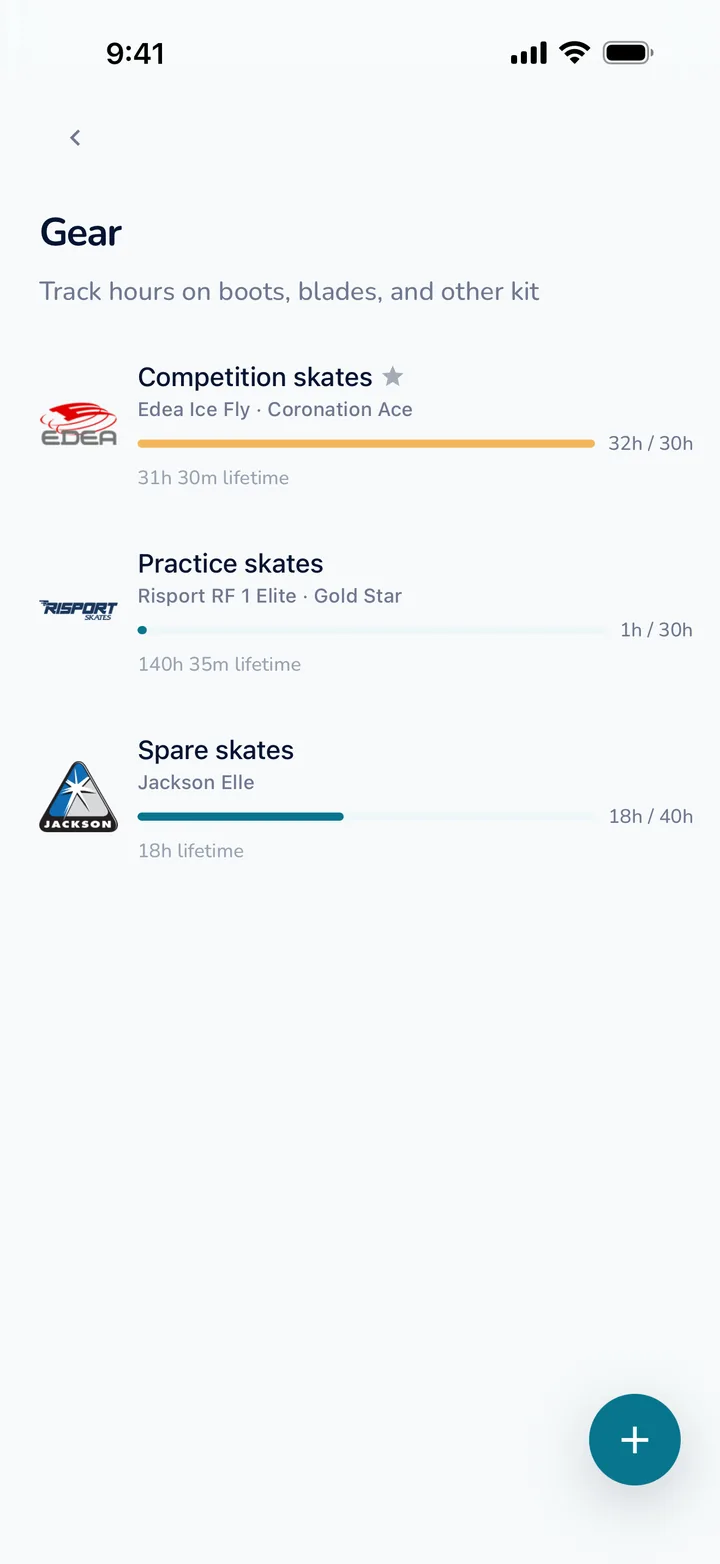
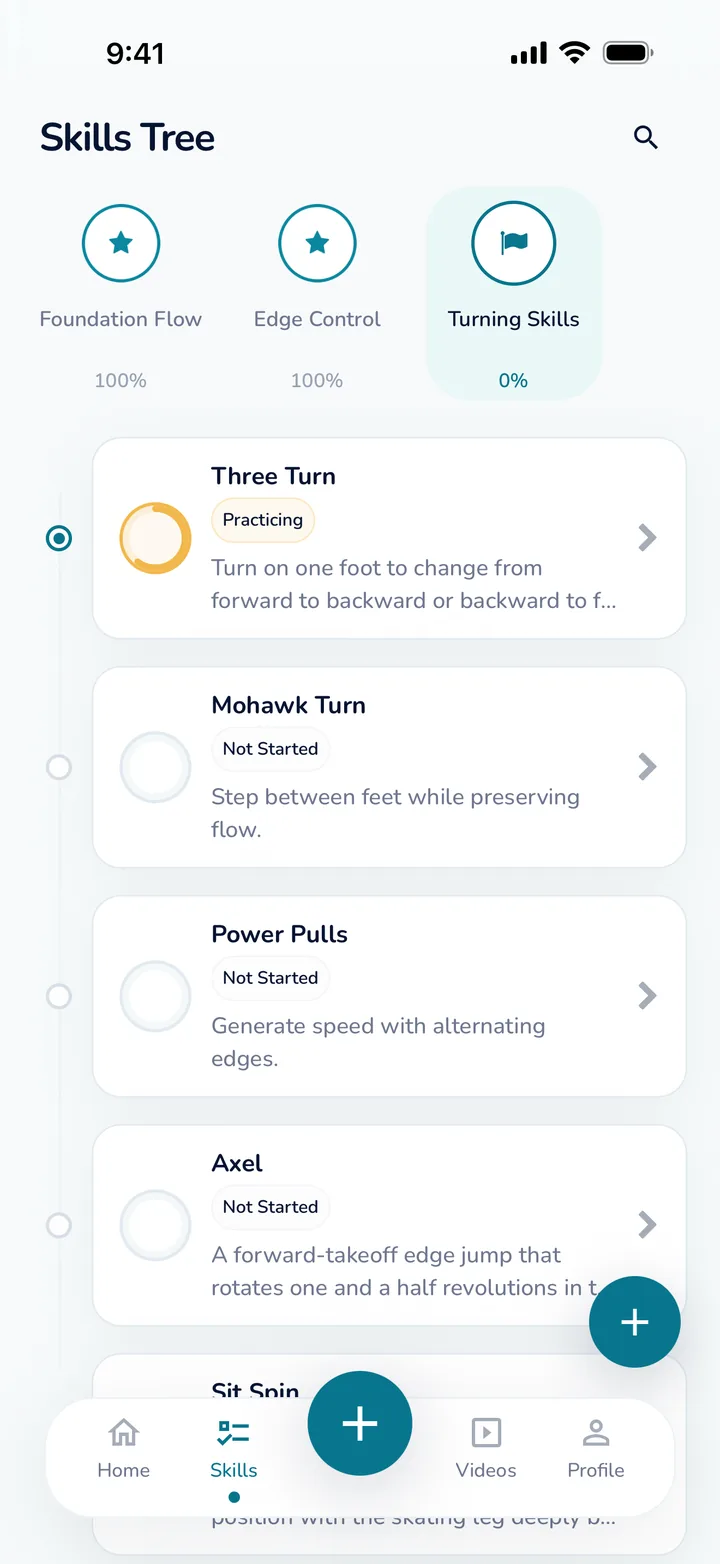
Axel’s stages and tiers are its own skill path, not a national programme or a formal pass. Use them to note what you are working on between lessons in whichever programme your rink teaches; every status in Axel is self-assessed.